

Diode Ring Modulator - ADALM2000
Contents
Project Overview
Figure 1 shows Analog Device's Active Learning Module (ADALM2000) [1]. It uses the Graphical User Interface of popular Operating Systems to virtualize the most common electronic lab instruments.
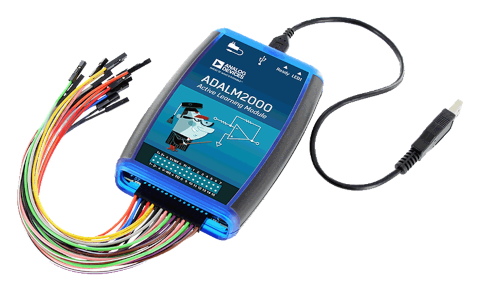
Figure 1. ADALM2000.
A Zynq core acts as the heart of an open hardware and software application. Software Defined Radios (SDR) also exploit a similar architecture. Ironically, SDRs eliminate the need for Diode Ring Modulators, such as the advanced learning circuit covered by this article.
This article hopes to achieve two things. First, it offers a more workable example of a diode mixer. Analog's original Diode Ring Modulator design [2] failed for me.
Second, this article enables you to judge the quality of lab instrument virtualization. It presents a virtualized screen shot, shown in Figure 4, along with an analog image, shown in Figure 5. You can then compare the two for yourself.
Circuit Design
Analog's original circuit appears in Figure 2. While my modified ring modulator is shown in Figure 3. Both circuits inject W1's 1K Hz sine wave into T1/TR1 pin 1. But only the modified design grounds the secondary center tap created by TR1 pin 11 and 3.
The modified circuit also removes the ground from the center tap created by T2/TR2 pin 11 and 3. The mod simply shorts out the center tap to create a 2:1 transformer. RL is eliminated and W2's 10K Hz sine wave is injected into pin 1 of TR2.
Oscilloscope channel 1 probe is connected to TR1 pin 1. While channel 2 connects to TR2 pin 2.
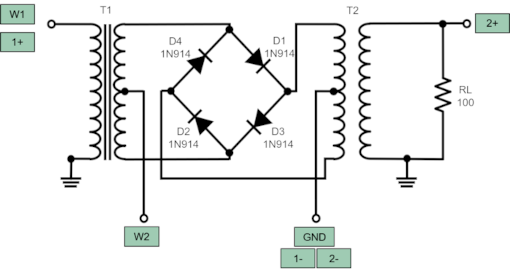
Figure 2. Original design.
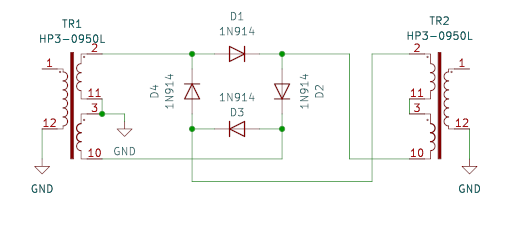
Figure 3. Modified design.
Results
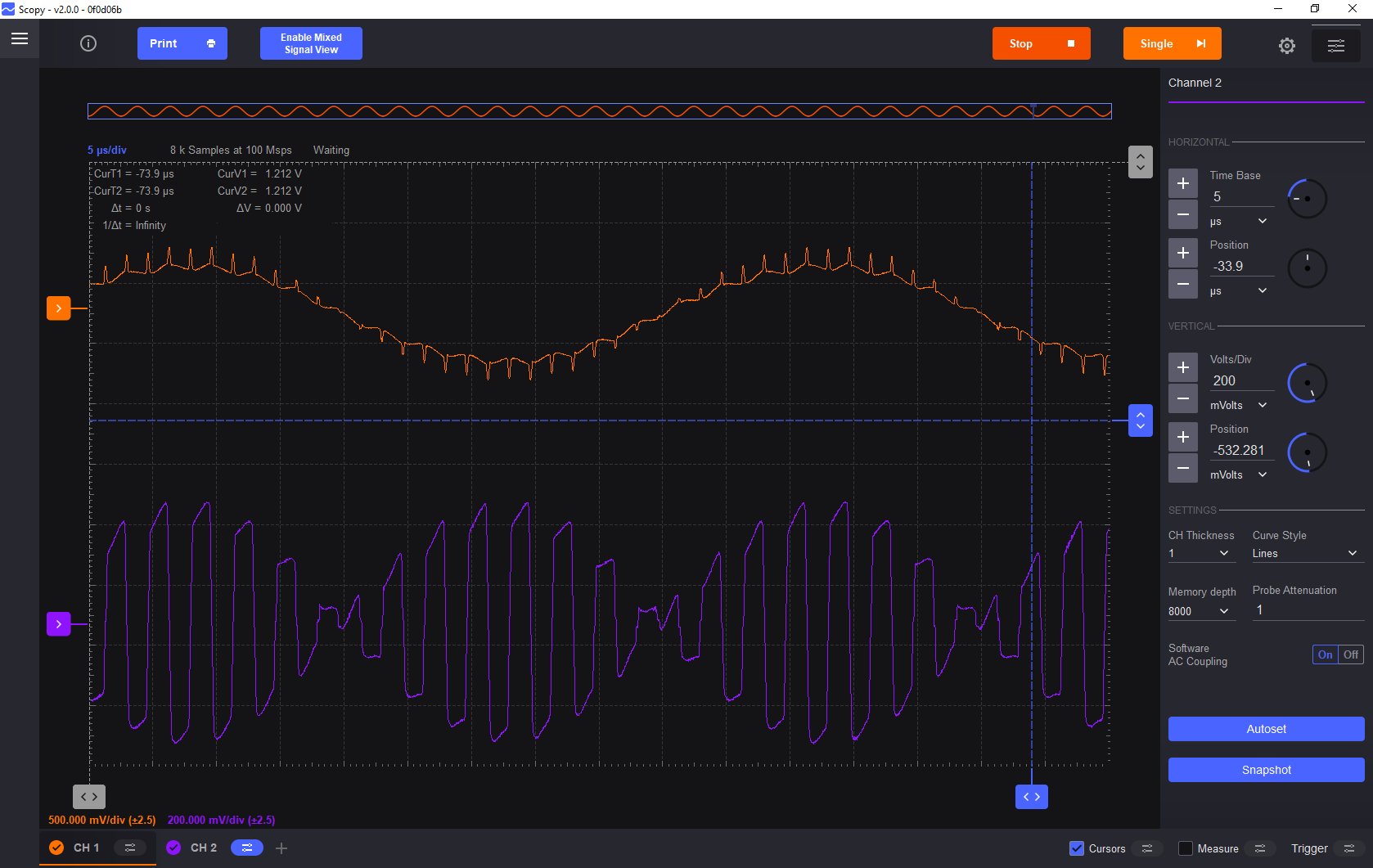
Figure 4. ADALM2000 oscilloscope. (Click on the schematic a couple of times to enlarge.)
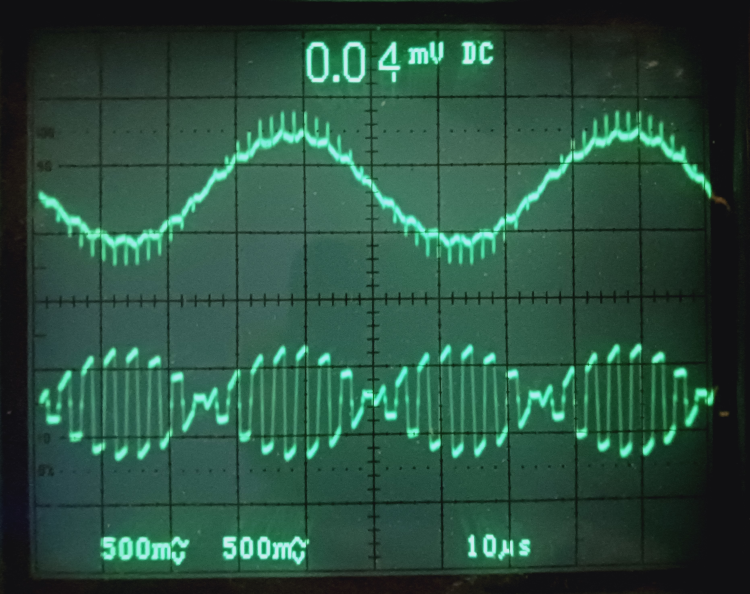
Figure 5. Analog oscilloscope. (Click on the schematic a couple of times to enlarge.)
Final Comments
The virtualized oscilloscope image is crisper than the analog image. It's also easier to digitally process. And features a flexible footprint that's smaller and lighter than an analog boatanchor.
Notes
Bill of Materials
| Component | Description | Qty |
|---|---|---|
| R1 | 100 Ω resistor | 1 |
| T1 - T2 | HP3-0950L Hexa-Path triflar-winding transformer | 2 |
| D1 - D4 | 1N914 small signal switching diode | 4 |
© 2025 Don Kuenz